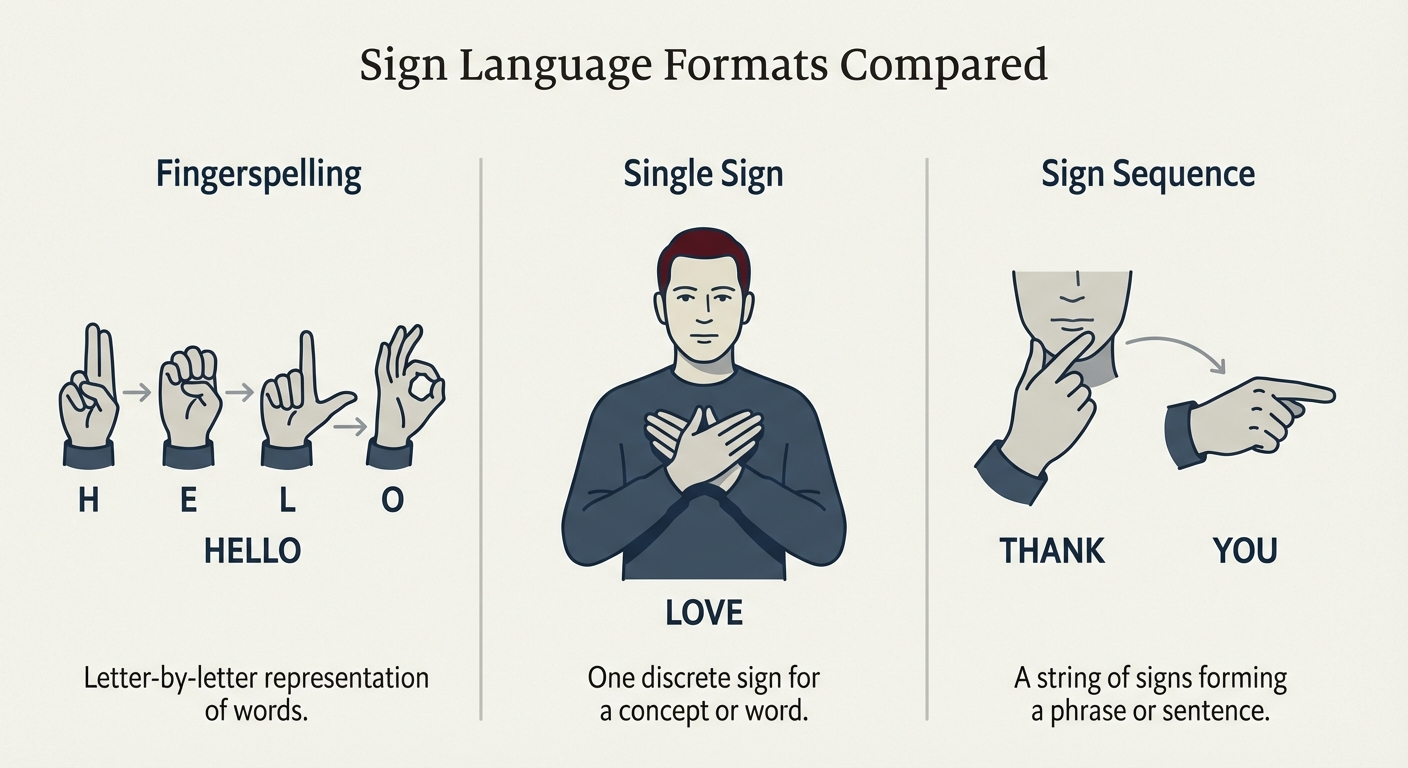
Communication isn’t just about what you say; it’s about how you connect. For students eager to expand their world and build essential skills, learning sign language offers a distinct path. It’s a visual language of movement, expression, and subtle details, enhancing your ability to truly connect with others.
What is Sign Language?
Sign language is a visual language that uses handshapes, facial expressions, and body movements to convey meaning. It’s the primary communication method for people in Deaf and hard-of-hearing communities. It also helps individuals who can hear but struggle with speech.
Many assume sign language is universal, but that’s not the case. Over 300 distinct sign languages exist worldwide, each with its own grammar and vocabulary. American Sign Language (ASL), for example, is used in the U.S. and parts of Canada and is entirely different from British Sign Language (BSL), despite both countries being English-speaking. Like spoken languages, each sign language is unique and evolves over time.
The Student Advantage: Skills Beyond the Classroom
Even a basic understanding of sign language offers students a unique set of advantages.
Improve Your Communication Skills: Learning to sign makes you a more attentive and expressive communicator. Since it relies heavily on non-verbal cues, you’ll naturally improve at reading facial expressions and body language—skills valuable in any interaction. This can even boost your spoken communication.
Sharpen Your Brainpower: Engaging with a visual-spatial language like ASL challenges your brain. Studies show that learning a second language, including sign language, can improve cognitive abilities like memory, problem-solving, and multitasking. It activates different brain regions, sharpening your critical and creative thinking.
Cultivate Empathy and Broaden Your Perspective: Learning sign language cultivates empathy. Communicating in this new way offers insight into the experiences of Deaf and hard-of-hearing communities. This understanding helps bridge communication gaps and fosters a more inclusive perspective. You’ll better appreciate diverse viewpoints and connect with a broader range of individuals.
A Skill for a More Connected World
In a world that’s more connected and diverse than ever, the ability to reach across different backgrounds is invaluable. Learning sign language contributes to a more inclusive society. It’s a practical skill that can lead to new friendships, richer cultural encounters, and even professional paths in areas like education and healthcare.
Whether you aim for fluency or just learn a few basic phrases, engaging with sign language is an impactful step in your personal journey. It pushes you to communicate differently, think more critically, and build stronger bonds with the people around you.
Leave a Reply